)
)
)
Pure CEO Spencer Craig on diversification, hybrid working and the future of food-to-go
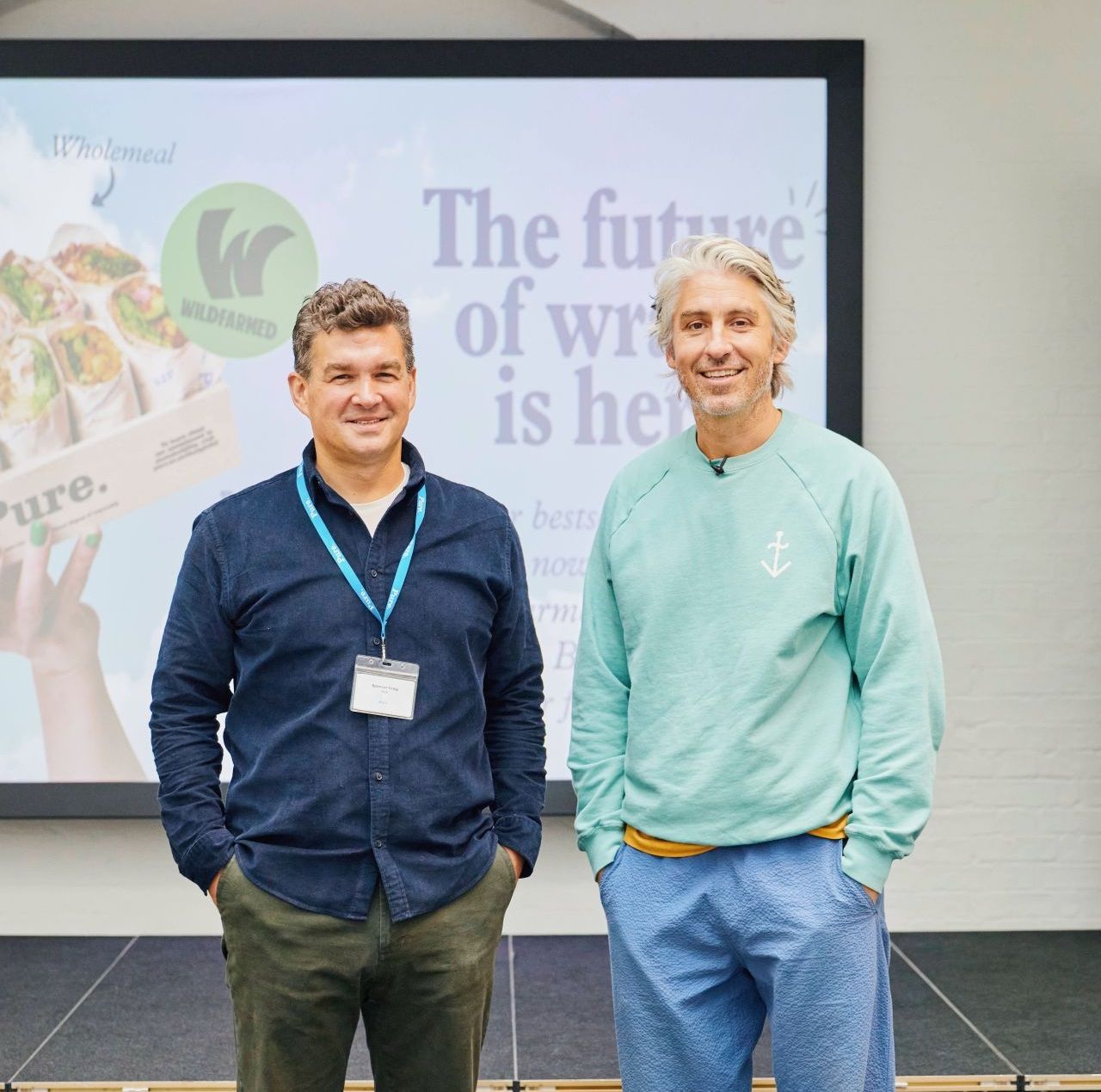
Pure has been one of the UK's most recognisable food-to-go brands since opening its first site in Soho in 2009. Over the past decade and a half, the business has navigated dramatic shifts in consumer behaviour, weathered the challenges of the pandemic and evolved from a retail-focused operator into a multi-channel business spanning workplace catering, meetings and events, wholesale and production.
Today, as demand grows for healthier, higher-quality food on the move, Pure is entering a new phase of growth. Recent initiatives, including the launch of a wholesale range and a partnership with regenerative farming pioneer Wildfarmed, reflect the company's ambition to meet consumers wherever they are while continuing to prioritise quality, convenience and sustainability.
We caught up with Pure CEO Spencer Craig to discuss the brand's evolution, the future of food-to-go, changing consumer expectations and why diversification has become more important than ever.
Pure launched in Soho in 2009 and quickly became one of the UK's fastest-growing food-to-go brands. Looking back, what do you think Pure got right in those early years that helped it stand out?
Product quality. You can get people to come in once but unless the product is delicious, consistent and meets their needs, they won't come back.
Covid fundamentally changed the economics of city-centre food-to-go. What were the toughest decisions you had to make during that period, and what lessons still shape the business today?
Lots of tough decisions. The main lesson is diversification.
Pure has evolved from a retail-led business into a multi-channel operation spanning shops, workplace catering, meetings and events, wholesale and production. Was that diversification always part of the plan, or did it emerge from necessity? What have been some of the learnings from this expansion?
Maybe some of it would have happened over time in an alternative world without Covid, but we made the change once we fully understood how consumer habits had changed.
What does a successful food-to-go business look like in 2026 compared with 2019?
There are less people visiting less frequently. So, you need to have an offer which maximises sales when people are on the move. But mostly, it is still about having brilliant product. If you get that right, positive things will follow.
Hybrid working has permanently changed customer behaviour. How have expectations around convenience, value and quality evolved over the last five years?
They have definitely evolved. Convenience is still a big factor. Days at the office can often be intense and speed of service/convenience is still very important.
Value and quality are, as I see it, two sides of the same coin. Our belief is that great quality creates value. Quality can mean different things but for us it is a combination of taste, portion size and ingredient quality.
Would you rather pay £7 for a salad which leaves you hungry in two hours and reaching for a bag of crisps? Or £10 for a salad that gives you the high-quality protein to get through the rest of your day?
Pure has launched a wholesale range targeting offices, gyms, travel hubs and other locations. Where are you seeing the most exciting growth opportunities outside traditional retail stores?
We are just at the start of this journey, but the very positive response has even surprised us. When people are on-the-move for a reason other than eating out, they are no longer accepting poor-standard food-to-go.
We are doing particularly well in offices and conference centres. We are in discussions with a number of stadiums and we are excited to see how this works as they are traditionally the home of burgers or other fast food.
You recently partnered with Wildfarmed to introduce regeneratively farmed flour across your wrap range. What role do you think regenerative agriculture will play in the future of foodservice and retail food-to-go?
Customers still value taste above all else. Sustainable options also need to be competitive on price. We have managed to do both of these things with the Wildfarmed wraps and they are already a huge success.
Many operators want to improve sustainability credentials but are facing significant cost pressures. How can businesses balance environmental ambitions with commercial realities?
It doesn't have to be costly and if customers like brands that are more sustainable, the cost of not doing it will be a loss of sales. And sometimes, it is just good to do the right thing.
Looking across the food and drink sector, which consumer trends do you believe are reshaping the market, and which do you think are receiving more attention than they deserve?
Health really is here to stay and a big driver of decision-making. It has to be delicious and value for money, but health is now playing a big and consistent part in decision-making.
On being overplayed, I'm interested to see what the matcha market looks like in a few years' time.
If we catch up again in 2030, what would success look like for Pure, and what role do you hope the business will be playing within the wider UK food and drink industry?
That's a big question! I hope we play a part in allowing people to eat well and eat what they want when they are on the move.
Whether you are catching a flight, commuting to work, popping out of the office, attending a meeting or conference, or going to a stadium, these are all moments when you're on-the-move but still want to be able to eat how you would when you had more time.
Between our retail, catering and wholesale channels we can be a part of making all of these different occasions full of joy.
)
)
)
)
)
)
)
)
)
)
)
)
)
)
)
)
)
)
)
)
)
)
)
)
)
)
)
)

)
)
)
)
)
)
)
)
)
)
)
)
)
)
)
)
)
)
)
)
)

)
)
)
)