

'Be human when it matters': KAM's Katy Moses on attracting and retaining hospitality talent
Great colleagues, opportunities to develop and a healthy balance between life and work all play a role in keeping people in hospitality. But the experience employers offer starts well before someone’s first shift.
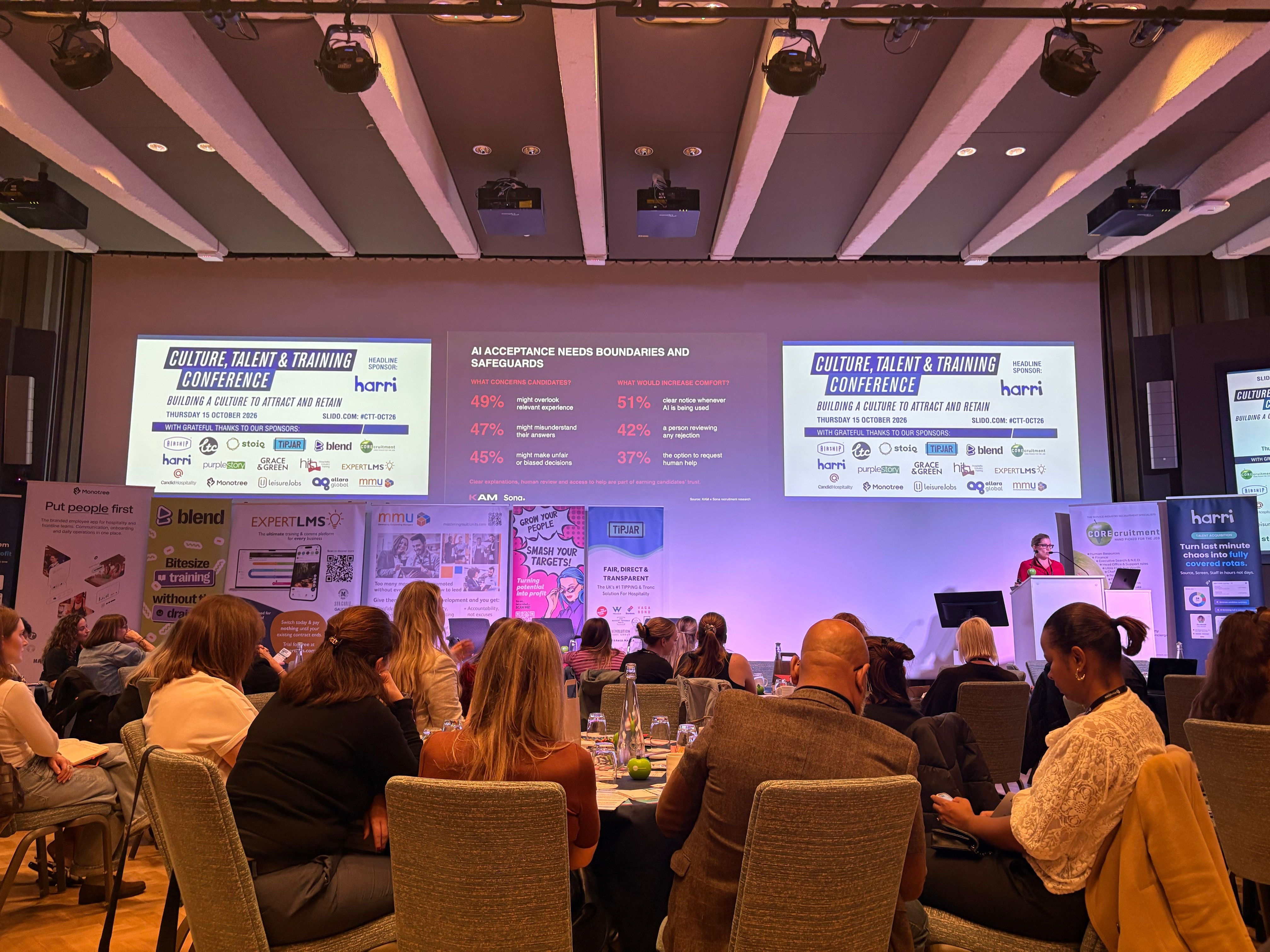
Speaking at the Propel Culture, Talent & Training Conference, Katy Moses, Managing Director of KAM, explored what makes people stay, how recruitment shapes perceptions of a business and where technology can give managers more time to support their teams, launching exclusive new research in partnership with Sona.
Her message for hospitality employers was clear: understand what people value, remove unnecessary friction and preserve human conversations at the moments that matter.
Moses deliberately used the phrase “life-work balance”, putting life first. According to the figures she shared, 53% described their balance as well balanced, compared with 25% before the pandemic.
Alongside this improvement, her findings highlighted the importance of relationships and progression. Almost three quarters (72%) said working with great people kept them in their role, while 59% identified training and development.
“If we want people to build a career and not just a job then we want to capitalise on the things that make people stay,” she said.
For operators, those findings offer a useful focus for retention: the everyday experience of being part of a team and the opportunity to keep learning. Investing in these areas helps give employees reasons to see a future with the business.
That attention to experience also needs to extend to prospective employees. As Moses put it: “Unhappy applicants are as vocal as unhappy customers.”
Research from KAM and Sona, presented during the session, showed how practical frustrations can affect the later stages of recruitment. During right-to-work, reference or background checks, 24% had provided the same information more than once, 21% had experienced difficulty uploading or submitting documents, and 21% had used several systems or methods. For 11%, checks had delayed their application or start date.
These findings underline the value of clear requirements and straightforward handovers. A successful interview is only one part of the journey; the steps that follow also shape a candidate’s first impression of their employer.
AI offers opportunities to make that process easier, provided employers understand where candidates welcome automation and where they expect personal contact.
Moses shared that 42% of candidates were comfortable with AI automating simple tasks, but did not want it to replace conversations with people. Pay discussions were a particular priority for human involvement, with 62% wanting a person involved.
The KAM and Sona research also revealed concerns about how AI might assess applicants. Almost half (49%) worried it might overlook relevant experience, 47% that it might misunderstand their answers, and 45% that it might make unfair or biased decisions.
Transparency and access to people could help build confidence. Clear notice whenever AI was being used would increase comfort for 51%, while 42% wanted a person to review any rejection and 37% wanted the option to request human help.
There were also clear opportunities to ease the workload for hiring teams. With 21% of operators saying recruitment took more time than they would like, teams identified checking applications were complete (36%), answering applicant questions (32%), scheduling interviews (31%) and sending reminders (29%) as areas where automation could be useful.
The session encouraged employers to consider how they would use the time saved: for more meaningful candidate conversations, better onboarding, and supporting and developing existing teams.
“Be human when it matters, use AI to take away the friction and to automate simple tasks,” Moses said.
For hospitality businesses, this provides a practical direction for recruitment and retention: make joining the business straightforward, give managers time to build relationships and keep investing in the people and development opportunities that encourage employees to stay.
The full research report from KAM and Sona is available to download for free here.