


Beyond the Screen: Rediscovering the Art of Dining Out
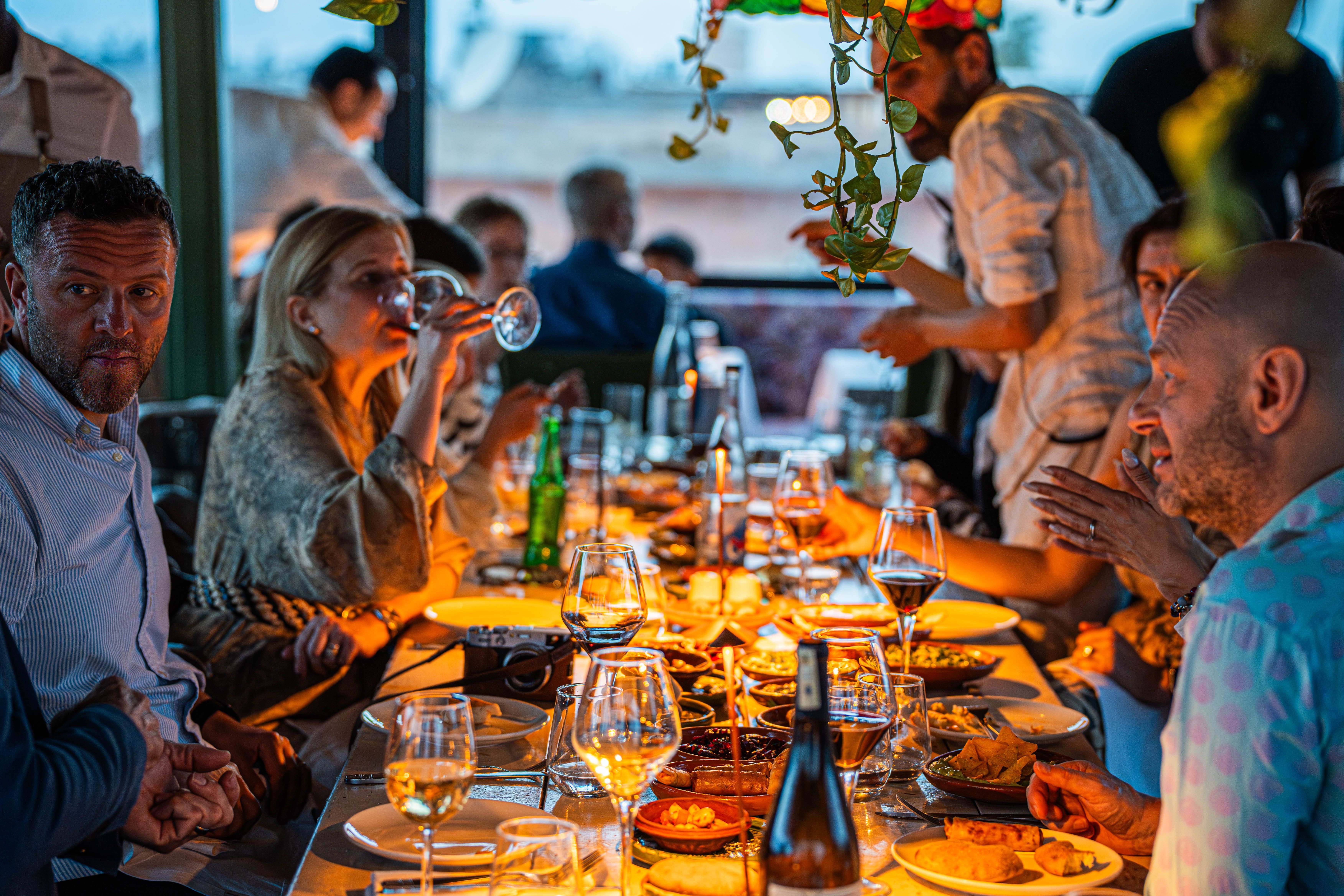
Since the late ‘90s and early ‘00s, technology has rapidly developed and changed how we live our everyday lives, shaping how we interact with the world and its surroundings. From the early inception of the internet to Apple’s latest release of the iPhone Duo, technology has connected us globally and has cemented itself into the cultural zeitgeist. Yet despite technology's ability to connect us globally, it's worth questioning whether our increasing dependence on digital devices is affecting the way we connect with one another. One area where this sense of disconnection is particularly evident is in hospitality settings, especially restaurants and other dining spaces.
Before smartphones became so ingrained in our everyday lives, gathering with friends and family members around a restaurant table was a ritual that most enjoyed and would look forward to. Dining out often carried a sense of occasion. We would wear our best outfits, look forward to catching up with loved ones and enjoy an appetising meal together. We actively wanted to engage with others and the experience was just as much about the company and conversation than the food itself. Now, we can barely make it through dinner without reaching for our phones wondering what notifications await us and what we may be missing out on.
This sense of occasion was once particularly prominent in London's most prestigious dining establishments. During the 1920s, venues such as The Ritz, The Savoy and Claridge's were more than places to enjoy an exquisite meal, they were social destinations. Guests dressed for the occasion, enjoyed live music and spent evenings immersed in conversation. At The Savoy, afternoon tea could be accompanied by live bands and dancing, while Harrods' Georgian restaurant became known for its fashionable tea dances. Dining was an experience to be savoured rather than rushed, and the people sitting opposite you were arguably the evening's greatest attraction.
Fast-forward a century and many of these traditions remain very much alive. The Ritz continues to embrace formal dining etiquette, with its dress code and traditional dinner dances, while Claridge's maintains its reputation for refined hospitality and discretion. At The Dorchester, guests can still enjoy afternoon tea accompanied by a live pianist, and Fortnum & Mason's Diamond Jubilee Tea Salon celebrates the ritual of tea through personal service and live music. What makes these experiences memorable isn't simply the quality of the food or the grandeur of the surroundings, but the sense of occasion they create. They encourage us to slow down, appreciate our environment and enjoy the company of those around us.
While London's most prestigious establishments continue to preserve these traditions, other restaurants are finding new ways to encourage guests to disconnect and rediscover the social experience of dining. The restaurant Dans le Noir?, located in Farringdon, is one such example that achieves this. As part of their sensory dining experience, guests are required to lock away their devices prior to entering the dining room. While this is primarily to preserve the integrity of the experience, it offers a rare opportunity for diners to disconnect and be fully present. General Manager Kornelia Narzymska explained that “In a world where we are constantly connected to our screens, our dining experience encourages guests to slow down, engage in meaningful conversations and reconnect with those around them.” She added that, “Without visual distractions, guests naturally become more attentive to their other senses, the food they are tasting and, perhaps most importantly, the people they are sharing the experience with.” Narzymska also noted that guests leave with a renewed appreciation for genuine human connection.
For some restaurants, the idea of disconnecting from technology is nothing new. At St. JOHN, this philosophy has been firmly in place since opening in 1994. As co-founder Trevor Gulliver recalls, “When we opened St. JOHN in 1994, phones were phones and not ‘devices’, they were also the size of a small house brick.”
While technology has evolved, the restaurant's approach to dining has remained largely unchanged. For Gulliver, “lunch is lunch, and in a restaurant, something to be respected”, a sentiment reflected in its longstanding no-phone-calls policy. Despite the rise of smartphones and food photography, St. JOHN has maintained its boundaries, with Gulliver explaining that “the rule still holds and people respect it, because, pretty much, everyone appreciates it.”
However, smartphones aren't the only potential disruption to the dining experience. Earlier this year, restaurateur Jeremy King publicly criticised influencer behaviour at his London restaurant, The Park, after photography sessions began interfering with other diners' experiences. In response, the restaurant introduced measures to minimise disruption and protect guests' privacy, highlighting the growing tension between social media culture and traditional hospitality.
Looking ahead, the growing appetite for analogue experiences could reshape dining etiquette and culture. Rather than being defined solely by dress codes and table manners, etiquette may increasingly mean being present, putting phones away and respecting fellow diners.
For the hospitality industry, this shift offers an opportunity to balance modern convenience with thoughtful service, meaningful conversation and a sense of occasion. Restaurants needn't abandon technology; they may simply need to make space for moments without it.
In an era where almost everything is shared online, perhaps the most memorable dining experiences will be those we choose to keep to ourselves.
Join us next year at Excel London between 5th - 7th April and subscribe to our newsletter for the latest news and updates.