)
)
)
Beyond Halloween: turning leftover pumpkin into menu inspiration
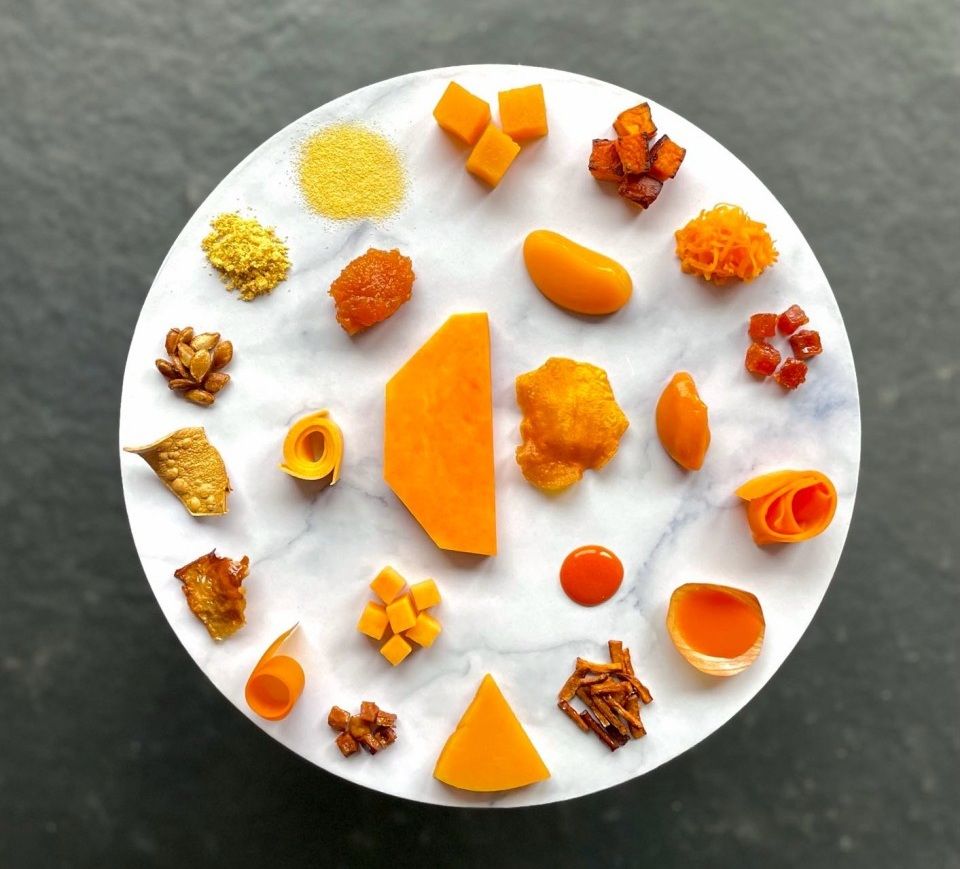
Leftover pumpkin offers plenty of possibilities beyond soup. Discover how chefs and food businesses can turn flesh, skin and seeds into creative dishes while reducing food waste, with inspiration from Anti Food Waste Chef Vojtech Vegh’s 23 ways with butternut squash.
When Halloween ends, pumpkin still has plenty to offer the kitchen. For chefs, caterers and food businesses, surplus edible pumpkins and unused prep trimmings can become the starting point for autumn dishes, condiments and garnishes, helping reduce food waste while making more of an ingredient already bought.
Soup is a useful place to start, but the possibilities reach much further. From ravioli fillings and pickles to sorbet and crisp seed toppings, pumpkin can bring sweetness, colour and texture to dishes across the menu.
Anti Food Waste Chef Vojtech Vegh illustrates that potential in his image of 23 butternut squash preparations. Bringing together flesh, skin and seeds on one plate, his work offers inspiration for looking again at the parts of pumpkin and squash that might otherwise be discarded.
Find out more about Vojtech at surplusfoodstudio.com.
Give the flesh a second life
Roasting pumpkin is a practical starting point for several dishes. Roasted pieces can be folded into grain salads, served with lentils or used in a curry, while a smooth purée can become a pasta filling, a sauce or the base for a seasonal dessert.
For a savoury special, try pumpkin ravioli with sage butter, roasted pumpkin with chickpeas and tahini, or a pumpkin risotto finished with toasted seeds. For sweeter applications, consider pumpkin cake, spiced pancakes or a cheesecake with a pumpkin swirl.
Different varieties need different treatment. Carving pumpkins can be more watery and fibrous than culinary varieties, so assess the flesh before deciding how to use it. Soups and stews can be useful outlets for pumpkins with a less pronounced flavour.
Seeds and skins
Seeds and suitable skins deserve a place in the prep plan too. Cleaned pumpkin seeds can be roasted with spices for a snack or used to add crunch to salads, soups and vegetable dishes. Skins vary in toughness, so their suitability depends on the variety and preparation.
Vojtech's plate takes this thinking further, including fried seeds, seed powder, candied skin and crispy skin. These preparations show how a single ingredient can contribute several components to a dish, with contrasting textures as well as flavours.
The opportunity for a professional kitchen is to identify useful applications before prep begins. A container for seeds and a planned use for suitable peelings make it easier to turn those possibilities into everyday practice.
23 ways with butternut squash
Vojtech's pictured dish features the following 23 preparations. Although the ingredient pictured is butternut squash, the techniques offer inspiration for chefs working with pumpkin too, adapting them to the variety available.
Outer circle, clockwise:
-
Cooked butternut squash
-
Roasted butternut squash
-
Grated butternut squash
-
Candied butternut squash
-
Marinated butternut squash
-
Butternut squash juice
-
Fried butternut squash skin
-
Whole baked butternut squash
-
Candied butternut squash skin
-
Butternut squash leather
-
Crispy butternut squash skin
-
Puffed butternut squash chips
-
Fried butternut squash seeds
-
Butternut squash seed powder
-
Butternut squash powder
Inner circle, clockwise:
-
Butternut squash purée
-
Butternut squash sorbet
-
Butternut squash syrup
-
Fermented butternut squash
-
Pickled butternut squash
-
Butternut squash jam
Centre:
-
Smoked butternut squash
-
Butternut squash chips
Build a use into the menu
For a busy kitchen, reducing waste starts with choosing preparations that fit the service. A roasted pumpkin special might also supply purée for another dish, with seeds providing a garnish. A café could use pumpkin in both a savoury lunch dish and a seasonal bake.
More involved preparations, such as leather, powders and sorbet, offer scope for experimentation where equipment and staff time allow. Pickling and fermentation also open up different flavour possibilities, using the kitchen’s established, validated processes.
The aim is to find uses that customers will enjoy and that the team can deliver consistently. Tracking how much pumpkin is used and discarded can help show which preparations make a practical difference.
)
)
)
)
)
)
)
)
)
)
)
)
)
)
)
)
)
)
)
)
)
)
)
)
)
)
)
)

)
)
)
)
)
)
)
)
)
)
)
)
)
)
)
)
)
)
)
)
)


)
)
)
)